

Three Mission Soil Projects Bring Stakeholders Together on Orchard Soil Health
LivingSoiLL, ISLANDR and NBSOIL, three EU-funded projects under the European Mission Soil, joined forces for a dissemination meeting that put soil health in permanent cropping systems and fruit growing at the centre of the conversation. The event brought 41 participants into one room to present the projects’ objectives, scope and activities, and to talk openly about what soil health looks like on the ground.
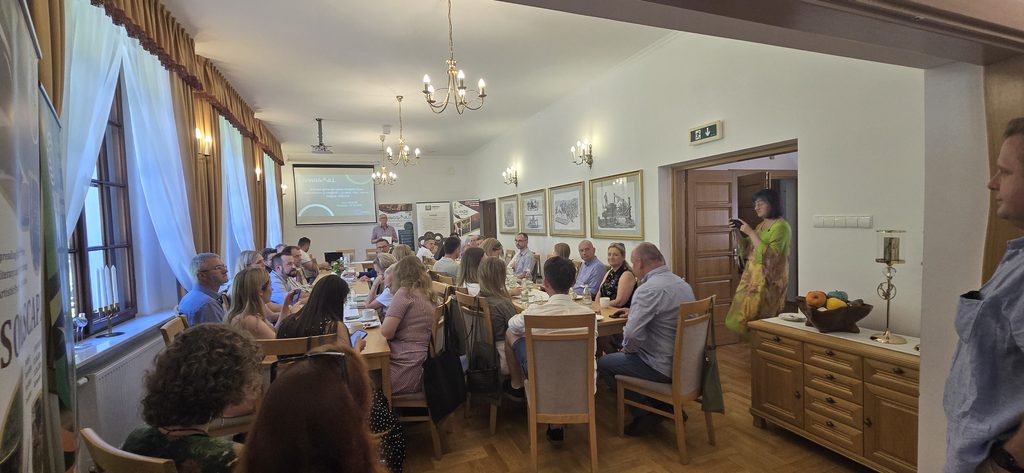
The meeting had two aims. The first was to share information about the three projects with a broad group of stakeholders. The second was to create room for dialogue, encourage knowledge exchange and discuss the real challenges and needs around soil health and sustainable soil management, particularly in orchards and other permanent crops.
Presenting LivingSoiLL, ISLANDR and NBSOIL side by side showed how different initiatives under the European Mission Soil can complement one another. It also created an opportunity to exchange experience, strengthen synergies and connect each project’s activities with the needs of farmers, advisors, researchers and public institutions. Seen together, local soil health challenges sit within a broader European context.
The three projects approach soil-related challenges from different perspectives, but they have a lot in common. All contribute to the objectives of the Mission Soil, and all share an interest in protecting and improving soil health and supporting more sustainable land and agricultural management. They also stress the importance of turning scientific knowledge into practical action, involving the right stakeholders and strengthening knowledge exchange.
The 41 participants came from every corner of the soil health community: researchers, fruit growers and orchard owners, agricultural advisors, public administration, producer and sectoral organisations, environmental and civil-society groups, and companies offering agricultural and soil-related solutions.
Among the institutions and organisations represented were the Warsaw University of Life Sciences (WULS), the Institute of Soil Science and Plant Cultivation – State Research Institute (IUNG-PIB), the Agricultural Advisory Centre in Brwinów, the Institute of Horticulture – National Research Institute, the Łukasiewicz Research Network – Institute of Aviation, the Agricultural and Food Quality Inspection, WWF Poland, the Polish Soil Orchestra, the Grójec Orchards Association, The Fruit, Kobieta w sadzie, Timac Agro Polska, NaturalCrop Poland and Agroekoton Association.
Presentations and the panel discussion highlighted several interconnected challenges: soil degradation, maintaining adequate soil organic matter, improving soil structure and nutrient availability, and ensuring the long-term productivity and resilience of agricultural soils.
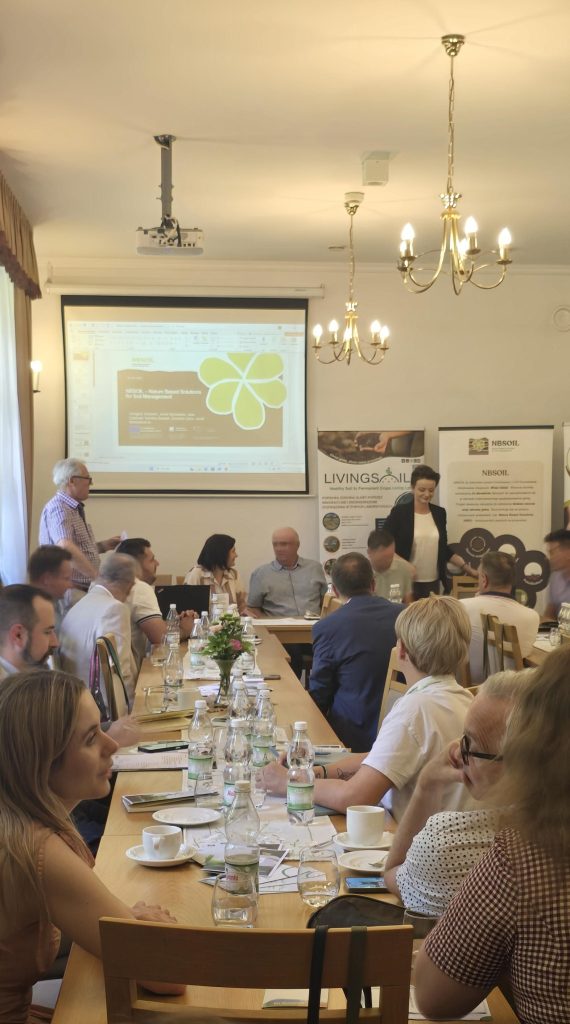
The conversation went well beyond technical soil problems, though. Participants also raised:
- the economic feasibility of soil-health-oriented practices
- barriers to putting them into practice at farm level
- the role of microorganisms in supporting soil functions
- the need for better information, advisory tools and practical recommendations for fruit growers
One priority in common is soil health solutions that are scientifically sound, but also practical, locally adapted and economically realistic for farmers. Participants also pointed to the need for better knowledge transfer between research and practice, clear recommendations, effective advisory support, and closer cooperation among researchers, growers, advisors, companies and public institutions.
The shared challenge, then, is not only identifying effective practices, but making sure farmers have the knowledge, tools, economic conditions and support to apply them.
Soil health is a complex issue, and each stakeholder group brings something different. These perspectives together make solutions more likely to be scientifically robust, practically applicable, locally relevant and economically realistic. The meeting showed clearly the value of connecting scientific knowledge with practical experience and institutional perspectives.
The meeting strengthened the basis for continued cooperation and knowledge exchange between LivingSoiLL, ISLANDR and NBSOIL. No new joint activity between the three projects was formally agreed, but existing synergies were reinforced and the door is open for future joint knowledge-sharing.
Through its Living Labs, LivingSoiLL brings farmers, researchers and other stakeholders together to identify soil health problems, co-create and test practical solutions under real farming conditions, monitor their effects and exchange knowledge. In the Grójec Living Lab, this approach is applied directly in commercial apple orchards, with the aim of developing soil management practices that are scientifically supported, practically feasible and relevant to growers.