

Looking Beneath the Vines: Ground Penetrating Radar Survey at Fundação da Casa de Mateus
Researchers from the Luso-Galician Living Lab carried out a Ground Penetrating Radar (GPR) survey at the Fundação da Casa de Mateus experimental site. Their aim was to find out what is happening in the soil below the vines.
Why look underground?
The survey set out to investigate subsurface soil conditions that may influence grapevine development and soil health. The team used GPR to identify variations in soil structure and possible subsurface constraints that could explain the differences in vigour seen across the vineyard. These results complement traditional soil analyses and add to a fuller picture of the vineyard ecosystem.
The Casa de Mateus site offered a good opportunity to test a non-invasive geophysical technology in a real vineyard. This fits LivingSoiLL’s goals, because understanding soil variability is essential for improving soil health and supporting sustainable vineyard management. Soil sampling gives information only at specific points, GPR can provide continuous subsurface information between those sampling locations and show features that may affect crop performance.
GPR works in a similar way to medical ultrasound, but it uses electromagnetic waves instead of sound. The instrument sends signals into the ground and records the echoes reflected by different materials. From these echoes it builds images of the subsurface. Soil can be investigated quickly and without disturbing the ground, which makes the method attractive for agriculture.
In vineyards and other agricultural systems, GPR can help identify:
- variations in soil horizons
- rock fragments
- root zones
- buried objects
- possible restrictions to water movement
These features can influence water availability, root development and ultimately crop performance. They are difficult to detect with conventional sampling alone.
Field work and preliminary findings
The survey was carried out by researchers from the PRISM Lab (Precision Remote-Sensing and Intelligent Sensing for Agriculture and Forestry Management Lab), Joaquim J. Sousa and Filipe Adão. They worked closely with Fundação da Casa de Mateus and LivingSoiLL partners.
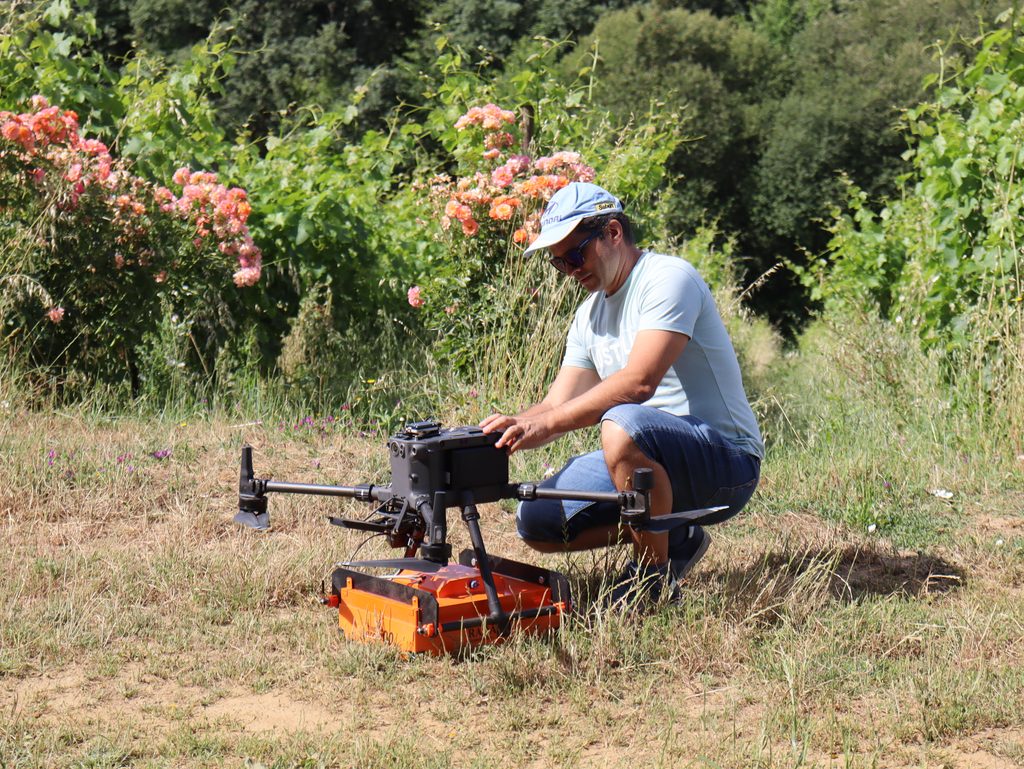
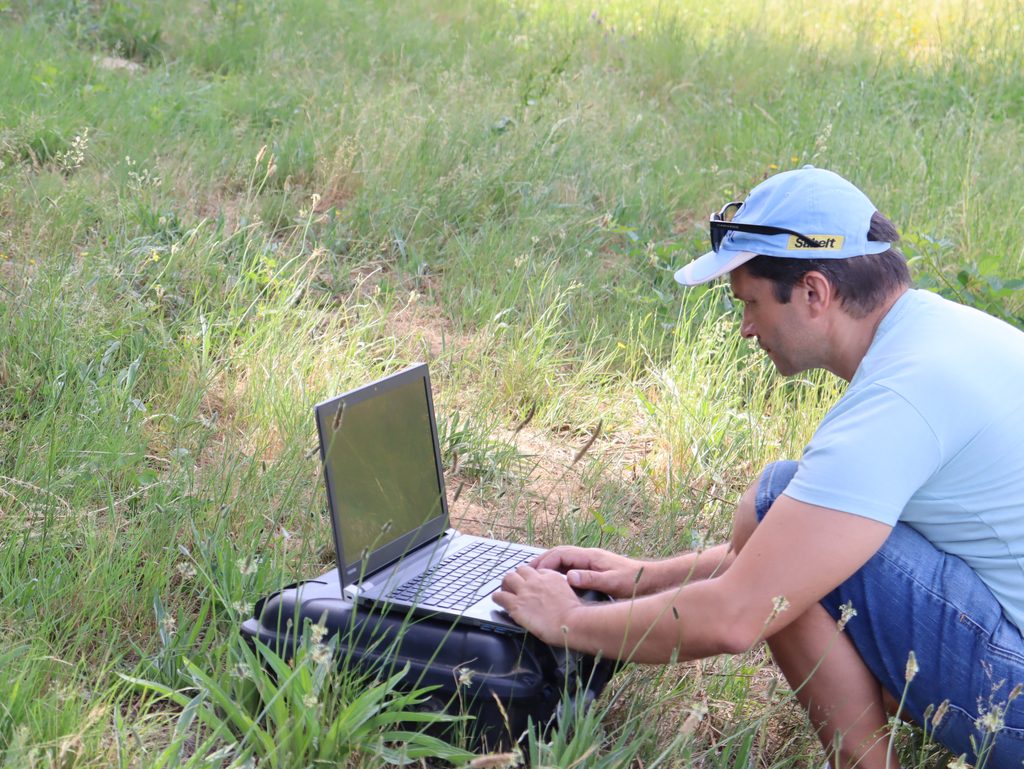
GPR profiles were acquired along the vineyard rows, in areas where soil samples had been collected earlier. Luís Pádua also captured multispectral imagery with an unmanned aerial vehicle (UAV) for comparison. This combined approach lets the team compare geophysical observations directly with conventional soil measurements, which improves the interpretation of soil conditions.
Data analysis is still ongoing, but the survey has already shown clear differences in the subsurface response across the vineyard. Areas with lower grapevine vigour had distinct radar signatures, which suggests variations in soil properties. The team also found numerous reflections associated with buried rocky elements. They detected a continuous subsurface layer at about one metre depth that may influence water dynamics. These observations show that GPR can reveal soil features likely to affect vineyard performance, and they warrant further investigation.
Towards precision soil management
Technologies such as GPR could become important components of future precision agriculture systems. Rapid, non-destructive information about the subsurface can support better soil management decisions and help optimise the use of resources such as water and fertilisers. Combined with other sensing technologies, GPR may contribute to more resilient and sustainable agricultural production.
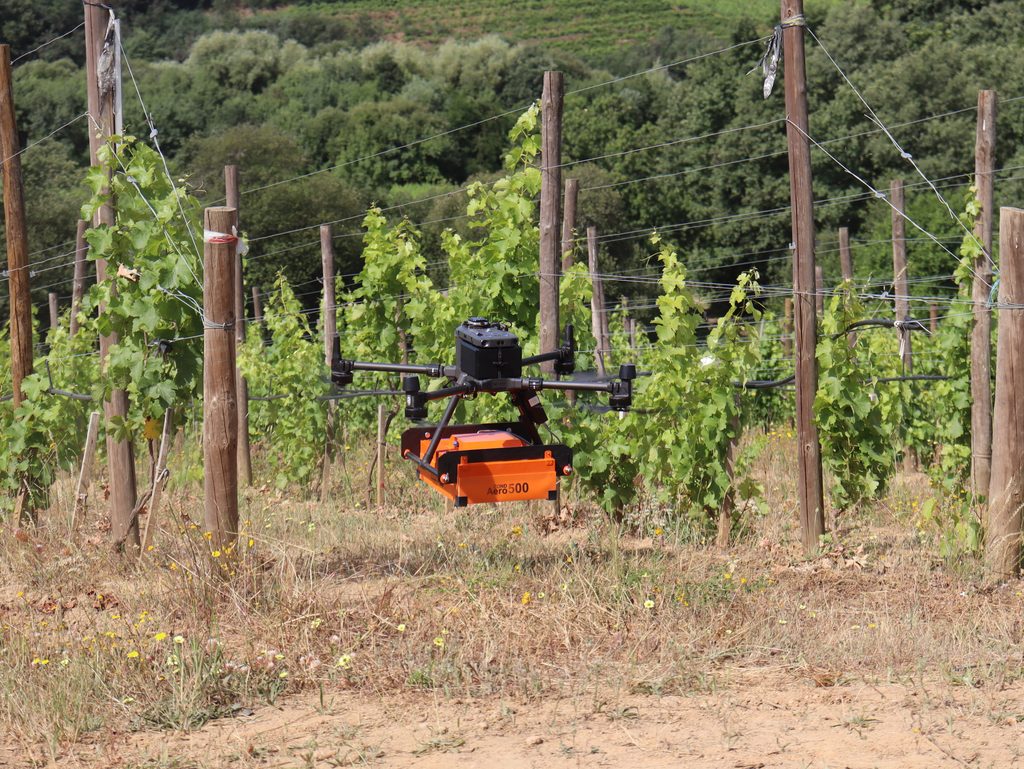
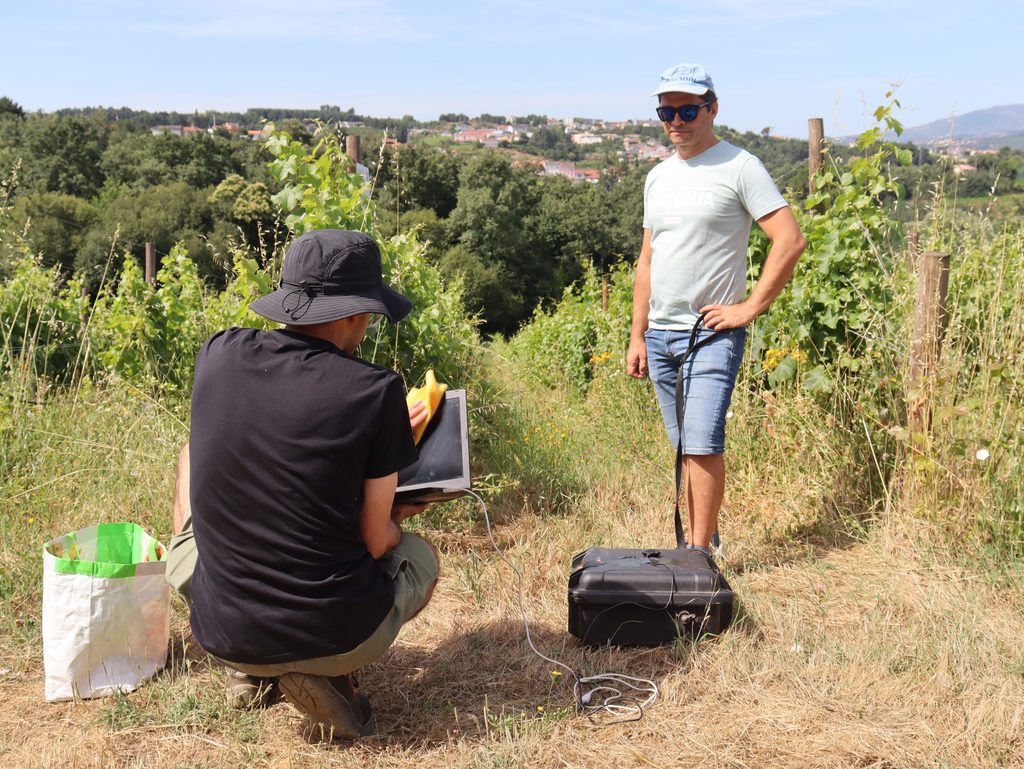
The team hopes to return to Fundação da Casa de Mateus for further surveys. Repeated measurements could show seasonal changes in soil moisture and clarify the relationship between subsurface conditions and grapevine development. Together with the monitoring already under way in LivingSoiLL, this could give valuable insights into soil processes and support more sustainable management practices.