

Rolling for Soil Health: Roller Crimper Demonstration in the Barbera Vineyards of Piemonte
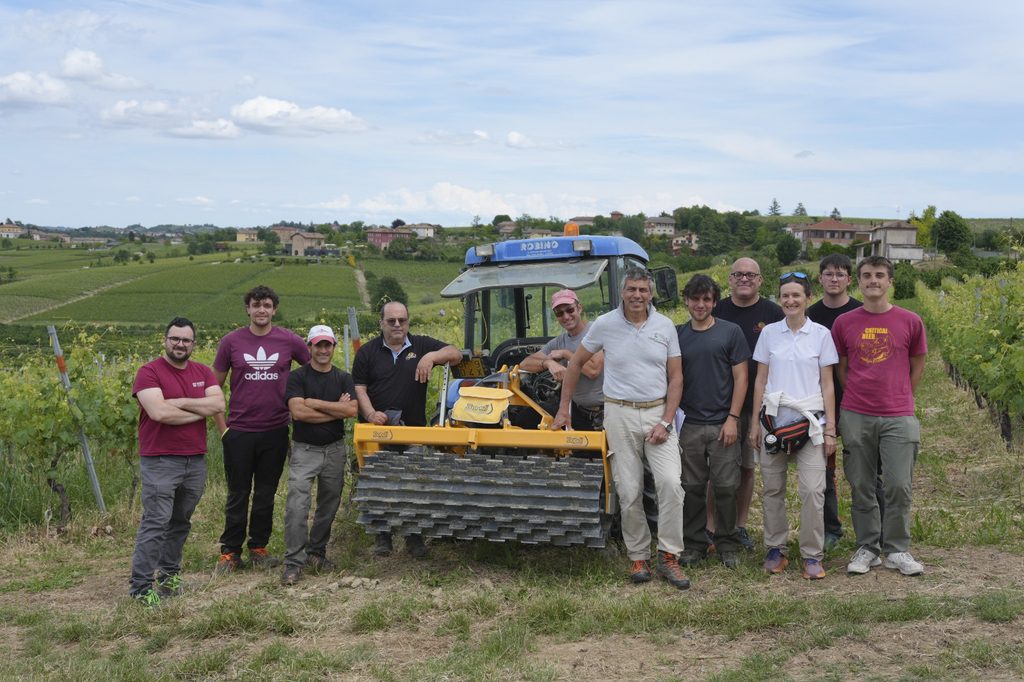
Healthy soil is the foundation of good grapes, and good grapes are the foundation of good wine. That message was at the heart of a field demonstration organised by the North-Western Italy-Piemonte Living Lab on May 18. The event brought farmers and local stakeholders together to see two cover crop termination techniques in action: mowing and rolling.
Seeing the techniques in real conditions
The demonstration took place at one of the project’s experimental sites, the Mauro Duretto farm in Costigliole d’Asti. The farm is a grape supplier and a member of the Barbera Sei Castelli Cooperative Winery and opened its doors to members of the cooperative, local viticulture advisors and university representatives.
The day began with an introduction to the LivingSoiLL project. A practical session followed, in which rolling was tested in the field and compared directly with mowing the cover crop. Participants then discussed the possible outcomes and implications of each strategy. Rolling is one of the solutions proposed within LivingSoiLL, and the aim was to show its strengths and its drawbacks alongside those of mowing.
Running the comparison on a working farm rather than in a purpose-built experimental plot was a deliberate choice. Farmers can see and try these techniques first-hand in real farming conditions, which helps encourage soil-friendly practices. It also lets them learn from the experience of others and replicate it on their own land.
How a roller crimper works
The crimper roller is widely used for terminating cover crops in arable systems. It is a heavy metal cylinder fitted with blades arranged in a spiral or chevron pattern. Unlike a flail mower, it is not driven by the tractor’s power take-off. It is simply pulled or pushed, depending on whether it is mounted at the rear or the front of the tractor.
As the tractor moves forward, the roller turns over the soil surface. The cover crop is flattened and mechanically damaged. What remains is a mulch layer made from the rolled biomass.
Mowing with a flail mower works differently. It can lead to rapid mineralisation of the chopped plant material. The hammering action of the flails can also compact the soil, which may degrade its structure.
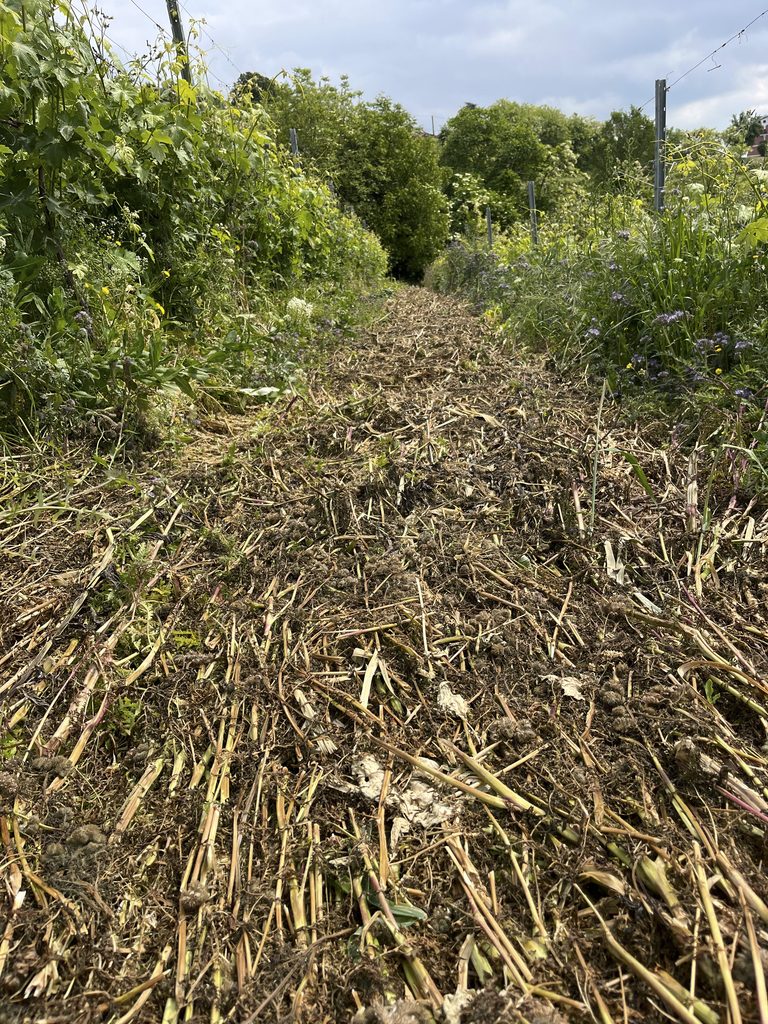
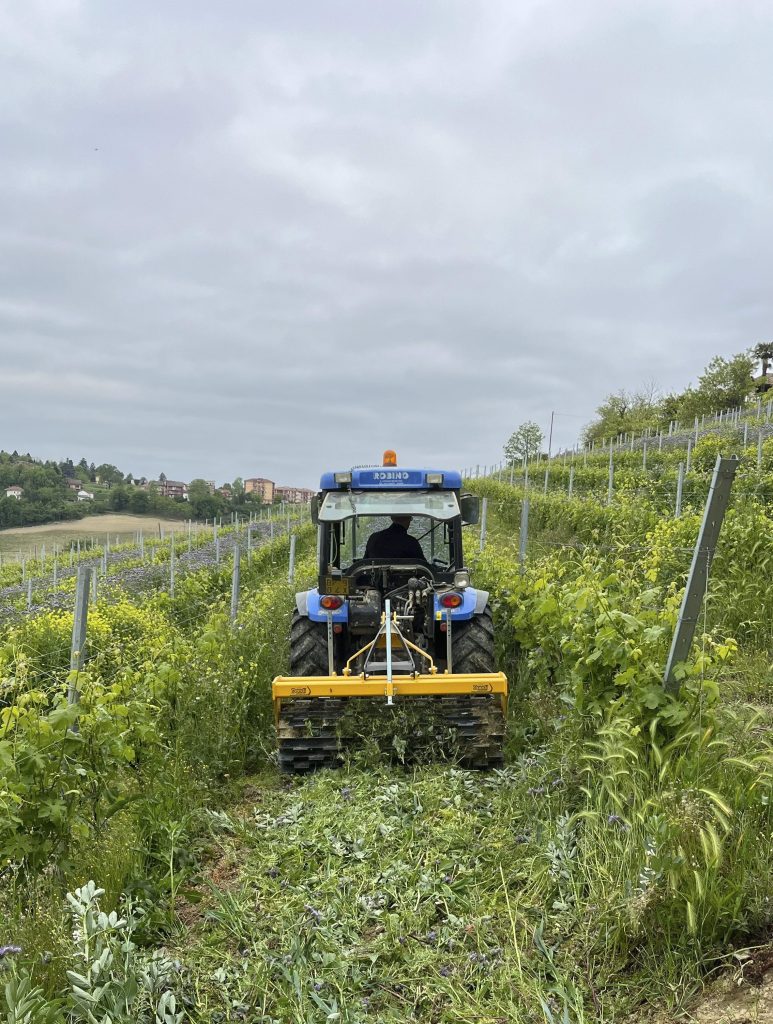
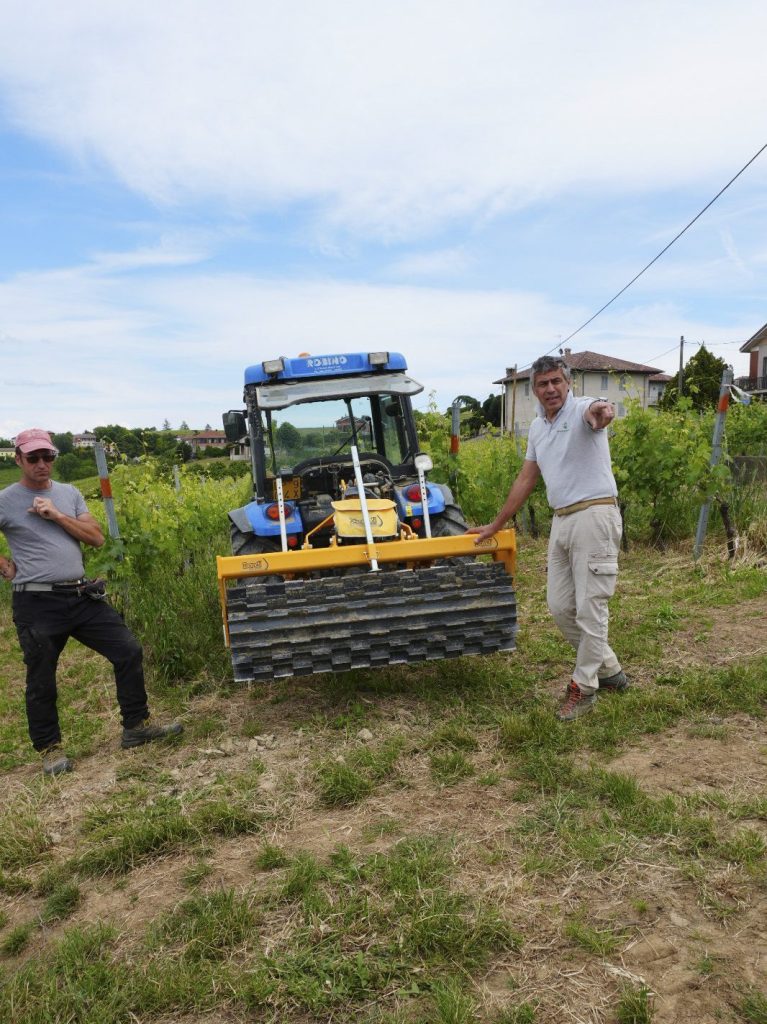
The mulch left by the roller crimper brings several benefits to vineyards and other permanent crops:
- Soil moisture: The mulch reduces evaporation from the soil and helps conserve water and moderate soil temperature. These conditions favour microbial activity, with potential benefits for nutrient cycling.
- Weed control: The green mulch limits weed germination and growth in the inter-row spaces.
- Erosion protection: Plant residues on the surface soften the impact of heavy rain and wind. Because rolled biomass breaks down more slowly than mowed biomass, the protection lasts longer.
- Soil organic matter: Slower decomposition releases nutrients gradually and contributes to the formation of humified organic matter in the soil.
A promising technique for hilly vineyards
The Living Lab expects rolling to become more widespread in permanent crops because of its positive effects on the soil-plant system. This applies especially where irrigation is not available, as in hilly vineyards. Conserving moisture matters most in those conditions.
Farmers who attended responded positively. They were struck by the new technique and by what it offers compared with more traditional practices such as mowing or tillage.
The main message of the day was that soil health contributes directly to the quality of grapes and wine. Specific agronomic practices can play an important role in maintaining and improving it. The combination of practices being implemented in the North-Western Italy-Piemonte Living Lab is intended to address key challenges that climate change poses for viticulture.